Strawberry Cream Danish Recipe – Easy & Delicious Treat
Strawberry Cream Danish is more than just a pastry; it’s a whisper of springtime and a burst of pure indulgence. Imagin extracte delicate, flaky layers of golden puff pastry, baked to an ethereal crispness, cradling a luscious, cloud-like filling that’s both tangy and sweet. This isn’t just any breakfast treat or afternoon pick-me-up; it’s a moment of pure, unadulterated joy. People adore the Strawberry Cream Danish for its perfect harmony of textures and flavors – the satisfying crunch giving way to the smooth, creamy center, all punctuated by the bright, fresh sweetness of ripe strawberries. What truly elevates this particular Strawberry Cream Danish is the effortless elegance it brings to any occasion, transforming a simple moment into a gourmet experience with minimal fuss. It’s the kind of recipe that makes you feel like a pastry chef in your own kitchen, creating something truly magical.
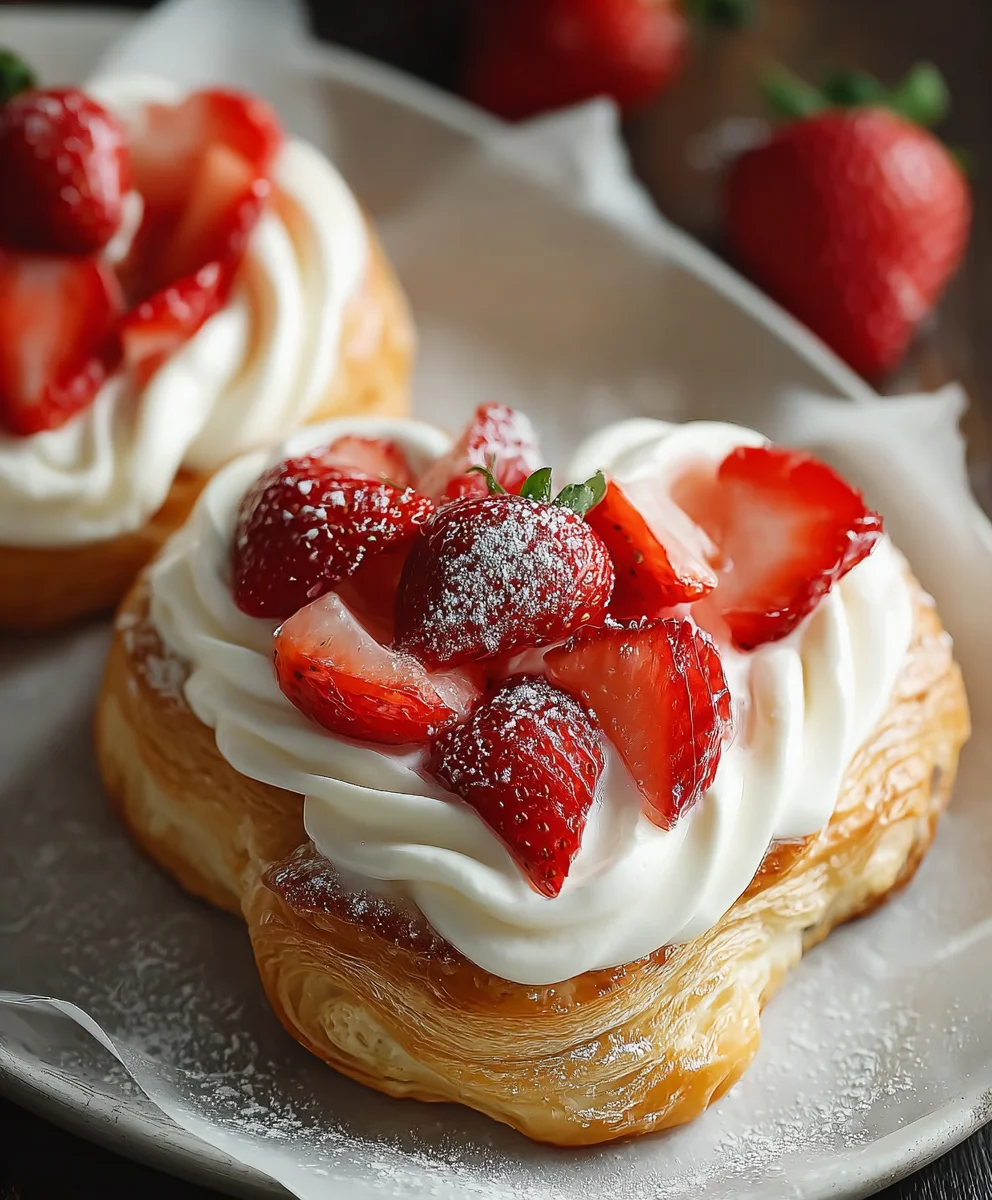
Ingredients:
- 1/4 cup warm water (around 105-115°F or 40-46°C)
- 2 1/4 teaspoons (1 packet) active dry yeast
- 1/2 cup milk, at room temperature
- 1 large egg, at room temperature
- 1/4 cup granulated sugar
- 1 teaspoon salt
- 2 1/2 cups all-purpose flour, plus more for dusting
- 1 cup (2 sticks) unsalted butter, cold and cut into cubes
- 8 ounces cream cheese, softened
- 1/4 cup granulated sugar
- 1/2 teaspoon vanilla extract
- Fresh strawberries, sliced for topping
- 1 cup powdered sugar
- 2 tablespoons milk or water (for glaze)
- 1/2 teaspoon vanilla extract (for glaze)
Preparing the Dough
Activating the Yeast
Start by proofing your yeast. In a small bowl or the bowl of your stand mixer, combine the 1/4 cup of warm water and the active dry yeast. Give it a gentle stir. Let this mixture sit undisturbed for about 5-10 minutes. You should see the yeast become foamy and bubbly on the surface, which indicates it’s alive and ready to work its magic in creating a wonderfully light and airy dough. If you don’t see any foaming, your yeast might be expired, or the water was too hot or too cold, and you’ll need to start over with fresh yeast and properly tempered water.
Mixing the Dough
Once the yeast is active, in the same bowl (or your stand mixer), add the 1/2 cup of room temperature milk, the room temperature large egg, the 1/4 cup of granulated sugar, and the 1 teaspoon of salt. Whisk these wet ingredients together until just combined. Now, gradually add the 2 1/2 cups of all-purpose flour. If you’re using a stand mixer, attach the dough hook and mix on low speed until a shaggy dough forms. If you’re mixing by hand, stir with a wooden spoon until the flour is mostly incorporated. Continue mixing until the dough comes together. It will still be a bit sticky at this stage, which is perfectly normal.
Developing the Dough Structure
Turn the dough out onto a lightly floured surface. Knead the dough for about 5-7 minutes by hand, or for about 4-5 minutes on medium-low speed with your stand mixer. You’re looking for a dough that is smooth, elastic, and springs back when gently poked. It should be soft but not overly sticky. The kneading process develops the gluten, which is essential for the flaky layers in your Danish.
First Rise
Lightly grease a clean bowl with a little oil or cooking spray. Place the kneaded dough into the greased bowl, turning it to coat all sides. Cover the bowl tightly with plastic wrap or a damp kitchen towel. Let the dough rise in a warm, draft-free place for about 1 to 1.5 hours, or until it has doubled in size. A slightly warm oven (turned off, with the light on) is a great spot for this.
Incorporating the Butter (Laminating the Dough)
Preparing the Butter Block
While your dough is rising, prepare your butter. Take the 1 cup of cold, unsalted butter and place it between two sheets of parchment paper. Use a rolling pin to pound and shape the butter into a rough 6×8 inch rectangle. It’s important that the butter remains cold, so if it starts to soften too much, pop it back in the refrigerator for a few minutes. This cold butter is key to creating those distinct, flaky layers.
Enclosing the Butter
Once the dough has doubled, gently punch it down to release the air. Turn the dough out onto a lightly floured surface. Roll the dough out into a rectangle approximately 12×8 inches. Place the cold butter rectangle in the center of the dough, leaving a 1-inch border on all sides. Fold the longer sides of the dough up over the butter, meeting in the middle. Then, fold the dough in half like closing a book. Pinch the seams tightly to completely enclose the butter.
The Folding Process (Turns)
This is where the magic happens! You’ll be creating layers through a series of folds. On a lightly floured surface, gently roll the dough package into a long rectangle, about 8×16 inches. Perform a “letter fold” by folding one-third of the dough over the center, then folding the remaining third over that. This is your first “turn.” Wrap the dough tightly in plastic wrap and refrigerate for at least 30 minutes. Repeat this process of rolling, folding, and chilling two more times, for a total of three turns. Always rotate the dough 90 degrees before each rolling and folding to ensure even layering. After the final turn, refrigerate the dough for at least 1 hour, or preferably overnight, to allow the gluten to relax and the butter to firm up.
Assembling and Baking the Strawberry Cream Danish
Creating the Filling
While the dough is chilling, prepare your cream cheese filling. In a medium bowl, beat the softened 8 ounces of cream cheese until smooth and creamy. Add the 1/4 cup of granulated sugar and the 1/2 teaspoon of vanilla extract. Beat until well combined and no lumps of cream cheese remain. Set aside.
Shaping the Danish
Preheat your oven to 400°F (200°C). Line two baking sheets with parchment paper. On a lightly floured surface, roll out your chilled dough into a large rectangle, about 12×16 inches and approximately 1/8 inch thick. Trim any uneven edges. Cut the dough into 6 equal rectangles. To form the classic Danish shape, you can make diagonal cuts in the corners of each rectangle, leaving the center intact. Then, gently fold the corners towards the center, overlapping them slightly to create a pocket. Alternatively, you can simply leave them as rectangles and spoon the filling into the center.
Filling and Baking
Spoon about 1-2 tablespoons of the cream cheese filling into the center of each dough rectangle, spreading it out slightly but leaving a border. Arrange the sliced fresh strawberries over the cream cheese filling. Carefully transfer the assembled Danish to your prepared baking sheets, leaving some space between them. Bake for 15-20 minutes, or until the pastry is golden brown and puffed up.
Glazing and Serving
Making the Glaze
While the Danish are baking or cooling, prepare the simple glaze. In a small bowl, whisk together the 1 cup of powdered sugar, 2 tablespoons of milk or water, and the 1/2 teaspoon of vanilla extract. Add more liquid, a teaspoon at a time, if the glaze is too thick, or more powdered sugar if it’s too thin, until you achieve a smooth, drizzling consistency.
Finishing Touches
Once the Strawberry Cream Danish are out of the oven and have cooled slightly on the baking sheets (about 5-10 minutes), transfer them to a wire rack to cool completely. Once cooled, generously drizzle the prepared glaze over the top of each Danish, allowing it to drip down the sides. Serve these delightful Strawberry Cream Danish while they are still slightly warm or at room temperature for a truly delicious treat.

Conclusion:
There you have it – a comprehensive guide to creating delicious Strawberry Cream Danish right in your own kitchen! This recipe is a delightful way to impress friends and family, or simply to treat yourself to something special. The sweet burst of fresh strawberries, combined with the rich, creamy filling and flaky pastry, makes this a truly satisfying dessert or breakfast option. Don’t be intimidated by the pastry; with a little patience, you’ll achieve beautiful, golden-brown results.
For serving, I love presenting these Strawberry Cream Danish warm, perhaps with a dusting of powdered sugar or a dollop of extra whipped cream. They also pair wonderfully with a cup of coffee or tea.
Feel free to get creative with variations! Consider adding a pinch of lemon zest to the cream cheese filling for a brighter flavor, or perhaps a sprinkle of finely chopped almonds on top for added crunch. You could even experiment with different berry combinations, like a strawberry-raspberry swirl.
I encourage you to give this Strawberry Cream Danish recipe a try. The process is rewarding, and the outcome is simply divine. Happy baking!
FAQs
Can I make the pastry from scratch?
While this recipe uses store-bought puff pastry for convenience, you absolutely can make your own puff pastry from scratch if you have the time and inclination. Homemade puff pastry will offer an even more elevated texture and flavor.
How should I store leftover Strawberry Cream Danish?
Store any leftover Strawberry Cream Danish in an airtight container in the refrigerator for up to 2-3 days. It’s best to enjoy them within a day or two for optimal freshness and texture, as the pastry can become a little softer over time.
What kind of cream cheese is best for the filling?
Full-fat cream cheese is highly recommended for the richest and creamiest filling. Make sure the cream cheese is softened to room temperature before whipping it with the other ingredients to ensure a smooth, lump-free consistency.
Strawberry Cream Danish
An easy and delicious recipe for homemade Strawberry Cream Danish featuring flaky, buttery pastry filled with sweet cream cheese and topped with fresh strawberries and a light glaze.
Ingredients
-
1/4 cup warm water
-
2 1/4 teaspoons active dry yeast
-
1/2 cup milk, at room temperature
-
1 large egg, at room temperature
-
1/4 cup granulated sugar
-
1 teaspoon salt
-
2 1/2 cups all-purpose flour, plus more for dusting
-
1 cup unsalted butter, cold and cut into cubes
-
8 ounces cream cheese, softened
-
1/4 cup granulated sugar
-
1/2 teaspoon vanilla extract
-
Fresh strawberries, sliced for topping
-
1 cup powdered sugar
-
2 tablespoons milk or water
-
1/2 teaspoon vanilla extract
Instructions
-
Step 1
Activate the yeast by combining warm water and yeast in a bowl and letting it sit for 5-10 minutes until foamy. -
Step 2
In the same bowl, add milk, egg, sugar, salt, and flour. Mix until a shaggy dough forms, then knead until smooth and elastic. -
Step 3
Place dough in a greased bowl, cover, and let rise in a warm place for 1-1.5 hours until doubled. While rising, prepare the cold butter by pounding it into a 6×8 inch rectangle between parchment paper. -
Step 4
Punch down dough, roll into a 12×8 inch rectangle. Place butter in the center, fold dough to enclose it, and perform three ‘letter folds’ with 30-minute chilling periods in between. Refrigerate dough for at least 1 hour after the final fold. -
Step 5
Prepare the cream cheese filling by beating softened cream cheese with sugar and vanilla until smooth. Preheat oven to 400°F (200°C) and line baking sheets. -
Step 6
Roll out chilled dough to 1/8 inch thick, cut into 6 rectangles. Shape each into a pocket by making corner cuts and folding them towards the center. Spoon cream cheese filling into the center and top with sliced strawberries. -
Step 7
Bake for 15-20 minutes until golden brown and puffed. While baking, prepare the glaze by whisking powdered sugar, milk/water, and vanilla until smooth. -
Step 8
Cool Danish slightly on baking sheets, then transfer to a wire rack to cool completely. Drizzle with glaze before serving.
Important Information
Nutrition Facts (Per Serving)
It is important to consider this information as approximate and not to use it as definitive health advice.
Allergy Information
Please check ingredients for potential allergens and consult a health professional if in doubt.