Easy Vegan Bibimbap Recipe- Delicious & Healthy Bowl
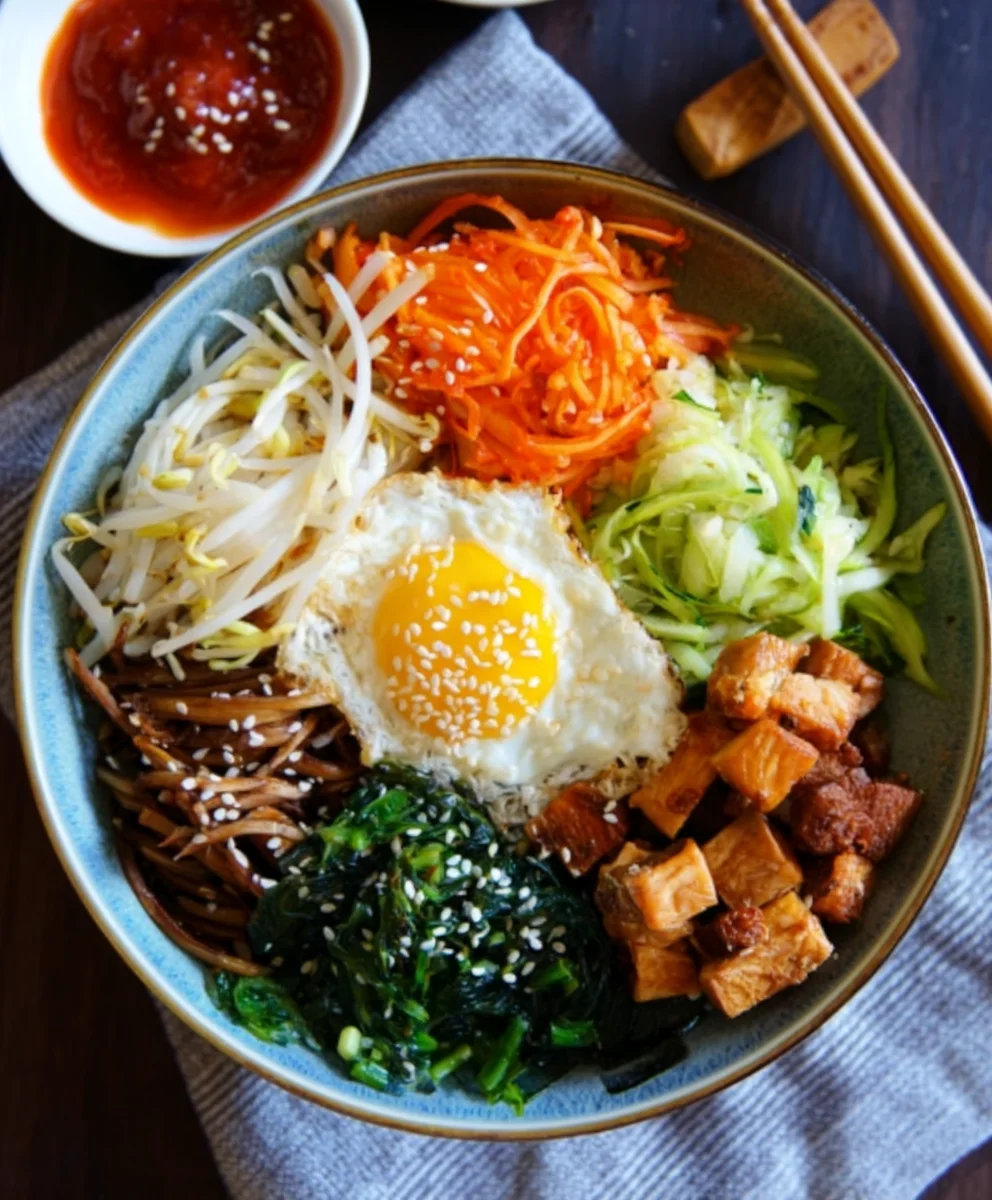
Vegan Bibimbap is more than just a meal; it’s a vibrant celebration of textures, colors, and flavors, a harmonious masterpiece waiting to be mixed and enjoyed. What is it about this Korean classic that captivates so many palates? It’s the sheer artistry of the dish – a beautiful arrangement of perfectly cooked vegetables, savory marinated tofu, and fluffy rice, all crowned with a dollop of spicy gochujang sauce. People adore Vegan Bibimbap for its incredible versatility, allowing for endless customization with whatever fresh produce is at hand, and for its deeply satisfying, wholesome goodness. It’s a dish that nourishes both the body and the soul, offering a delightful culinary adventure with every single bite. We’ll guide you through creating this iconic, plant-powered bowl right in your own kitchen, making it easier than ever to experience the magic of Vegan Bibimbap.”
Ingredients:
- 1 large cucumber
- 200 g fresh spinach
- 100 g fresh bean sprouts
- 1 large carrot
- 200 g firm tofu
- 100 g mushrooms of your choice (enoki mushrooms are recommended for their delicate texture)
- Salt, to taste
- Sesame oil, for cooking and finishing
- Minced garlic, for seasoning
- 2 tablespoons gochujang (Korean chili paste)
- 1 tablespoon rice vinegar
- 1 tablespoon agave nectar or maple syrup (for a vegan option)
- 1 tablespoon soy sauce
- 2 cloves garlic, minced
- 2 teaspoons sesame oil
Preparing the Vegetables
Cucumber Preparation
Begin extract by preparing your cucumber. Wash it thoroughly under cold running water. You can choose to peel the cucumber if you prefer a softer texture, or leave the skin on for added crunch and nutrients. Slice the cucumber into thin, bite-sized matchsticks, similar to how you would prepare julienned carrots. Once sliced, place the cucumber matchsticks in a small bowl. Lightly sprinkle them with a pinch of salt. This step helps to draw out some of the excess moisture from the cucumber, preventing it from making the rest of your bibimbap watery. Let it sit for about 5-10 minutes while you prepare the other vegetables. After it has rested, gently squeeze out any excess water before setting aside.
Spinach Preparation
Next, let’s tackle the spinach. Wash the spinach leaves very well to remove any dirt or grit. You might want to rinse them in a colander a few times. Bring a medium pot of water to a rolling boil. Add a generous pinch of salt to the boiling water. Carefully add the spinach to the boiling water and blanch it for just 30-60 seconds. You’ll see it wilt almost immediately. Immediately drain the spinach and plunge it into a bowl of ice-cold water (an ice bath). This shocking process stops the cooking and helps to preserve its vibrant green color. Once cooled, gently squeeze out as much excess water as possible. In a separate small bowl, season the blanched spinach with about half of the minced garlic, a tiny pinch of salt, and a drizzle of sesame oil. Toss gently to combine. This seasoned spinach will add a lovely subtle flavor to your bibimbap.
Bean Sprout Preparation
Now for the bean sprouts. Rinse the bean sprouts under cool water and drain them well. Similar to the spinach, you’ll want to blanch these. Bring another pot of water to a boil, and this time, add a pinch of salt. Add the bean sprouts to the boiling water and cook for just 1-2 minutes, until they are tender-crisp. You don’t want them to become mushy. Drain the bean sprouts and, if you like, rinse them briefly under cold water to stop the cooking. Squeeze out any excess water gently. In a clean bowl, season the bean sprouts with the remaining minced garlic, a pinch of salt, and a small drizzle of sesame oil. Toss to coat evenly. These will provide a delightful crunch and a fresh, earthy flavor.
Carrot Preparation
Peel the carrot and then slice it into thin, julienne-style matchsticks, similar to how you prepared the cucumber. Heat a little bit of oil (you can use a neutral cooking oil like vegetable or canola oil, or even a touch of sesame oil for extra flavor) in a non-stick skillet over medium heat. Add the carrot matchsticks to the hot skillet and stir-fry for about 2-3 minutes, or until they are slightly tender but still have a pleasant bite. Season with a pinch of salt. Remove from the skillet and set aside with the other prepared vegetables.
Mushroom and Tofu Preparation
If you’re using enoki mushrooms, trim off the root end. If using other mushrooms, slice them into manageable pieces. For the firm tofu, drain it very well and press out any excess water. You can do this by wrapping it in paper towels and placing something heavy on top for at least 15-30 minutes, or by using a tofu press. Cut the pressed tofu into bite-sized cubes or thin strips. Heat a tablespoon of sesame oil in your non-stick skillet over medium-high heat. Add the tofu cubes and cook, turning occasionally, until they are golden brown and slightly crispy on all sides. Remove the tofu from the skillet and set aside. In the same skillet, add another teaspoon of sesame oil if needed, and sauté your mushrooms until they are tender and slightly browned. If using enoki mushrooms, they cook very quickly, usually in just 2-3 minutes. Season the cooked mushrooms with a pinch of salt. Set the cooked tofu and mushrooms aside with the rest of your prepared toppings.
Making the Gochujang Sauce and Assembling the Bibimbap
Gochujang Sauce Creation
Now, let’s craft the flavorful sauce that brings the Vegan Bibimbap together. In a small bowl, combine the 2 tablespoons of gochujang, 1 tablespoon of rice vinegar, 1 tablespoon of agave nectar or maple syrup (for that perfect balance of sweet and spicy), and 1 tablespoon of soy sauce. Whisk these ingredients together thoroughly until you have a smooth, cohesive sauce. Taste the sauce and adjust the sweetness or saltiness to your preference. If you like it spicier, you can add a tiny bit more gochujang. If it’s too thick, you can add a splash of water or vegetable broth to thin it out slightly. This sauce is the heart of the bibimbap, so ensure it’s to your liking!
Assembling Your Vegan Bibimbap
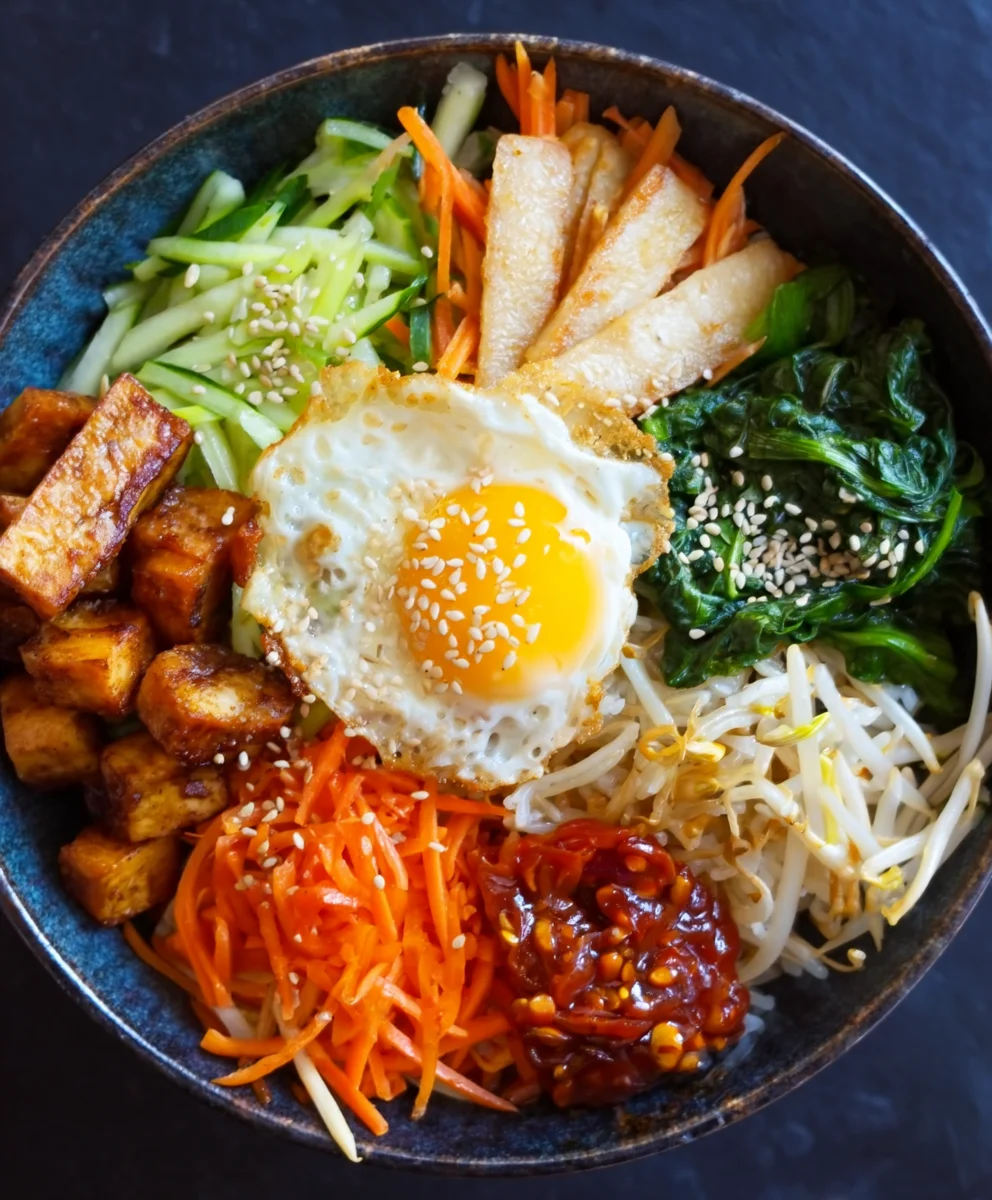
To assemble your beautiful Vegan Bibimbap, you’ll need individual serving bowls. Traditionally, bibimbap is served in a hot stone bowl (dolsot bibimbap), but any sturdy bowl will work wonderfully. If you have a stone bowl and want to achieve a crispy rice bottom, heat it over medium-high heat on the stovetop for about 5-10 minutes, then add a tablespoon of sesame oil and swirl it around. Carefully add about 1 cup of cooked rice (short-grain white rice is traditional and works best) to the heated bowl, pressing it down slightly to form an even layer. Let it cook for a few minutes to get crispy. If you’re not using a stone bowl, simply place a generous portion of cooked rice at the bottom of your regular serving bowls. Artfully arrange the prepared toppings – the seasoned spinach, blanched bean sprouts, julienned carrots, cucumber matchsticks, sautéed mushrooms, and golden-brown tofu – in separate sections over the rice. Aim for a colorful and visually appealing arrangement. Don’t overcrowd the bowl; leave some space for mixing.
Finishing Touches and Serving
Before serving, drizzle a little extra sesame oil over the assembled bibimbap for added aroma and richness. Then, add a dollop of the prepared gochujang sauce right in the center of the bowl. You can also add other optional toppings like a fried egg (if not strictly vegan) or some toasted sesame seeds for extra texture and flavor. Instruct your diners to mix everything together thoroughly before eating. The fun of bibimbap is in the mixing – combining the crispy rice, fresh vegetables, savory tofu, and spicy sauce into a harmonious bite. Enjoy the delightful explosion of flavors and textures!
Conclusion:
There you have it! A delicious and satisfying recipe for Vegan Bibimbap that’s bursting with flavor and vibrant colors. This dish is a fantastic way to enjoy a healthy, plant-based meal that’s as beautiful to look at as it is to eat. Don’t be intimidated by the number of components; each element is relatively simple to prepare, and the assembly is where the magic truly happens. Remember, the key to a great Vegan Bibimbap is the balance of textures and tastes, so feel free to adjust the vegetables and toppings to your liking. I encourage you to get creative and make this recipe your own!
Serve your Vegan Bibimbap immediately while the rice is warm and the toppings are fresh. It’s a complete meal on its own, but a side of kimchi or pickled radish can be a lovely accompaniment. For variations, consider adding pan-fried tofu, tempeh, or even some sautéed mushrooms for extra protein and depth. You can also experiment with different sauces; a spicy gochujang-based sauce is traditional, but a nutty sesame-gin extractger sauce or a creamy tahini dressing can also be delicious.
Frequently Asked Questions about Vegan Bibimbap:
Q: Can I make some components of the Vegan Bibimbap ahead of time?
A: Absolutely! Most of the vegetable toppings can be prepped a day in advance and stored in airtight containers in the refrigerator. The rice can also be cooked and reheated. This will make assembly on the day of serving much quicker and easier.
Q: What if I don’t have gochujang? Is there a substitute for the sauce?
A: While gochujang is the traditional spicy paste for bibimbap, you can create a delicious alternative. Mix sriracha or another chili-garlic sauce with a touch of soy sauce, rice vinegar, and a pinch of sugar. For a milder option, omit the chili sauce and focus on soy sauce, sesame oil, and garlic.
Easy Vegan Bibimbap Recipe- Delicious & Healthy Bowl
A vibrant and flavorful vegan bibimbap featuring fresh vegetables, crispy tofu, savory mushrooms, and a zesty gochujang sauce, all served over rice.
Ingredients
-
1 large cucumber
-
200 g fresh spinach
-
100 g fresh bean sprouts
-
1 large carrot
-
200 g firm tofu
-
100 g mushrooms of your choice
-
salt, to taste
-
sesame oil, for cooking and finishing
-
minced garlic, for seasoning
-
2 tablespoons gochujang
-
1 tablespoon rice vinegar
-
1 tablespoon agave nectar or maple syrup
-
1 tablespoon soy sauce
-
2 cloves garlic, minced
-
2 teaspoons sesame oil
Instructions
-
Step 1
Prepare the vegetables: Wash and julienne the cucumber, then lightly salt and squeeze out excess water. Blanch the spinach and bean sprouts, then season them with garlic, salt, and sesame oil. Julienne the carrot and stir-fry until tender-crisp. Press and cube the firm tofu, then pan-fry until golden brown. Sauté your chosen mushrooms until tender. -
Step 2
Make the gochujang sauce: In a small bowl, whisk together 2 tablespoons of gochujang, 1 tablespoon of rice vinegar, 1 tablespoon of agave nectar or maple syrup, and 1 tablespoon of soy sauce until smooth. -
Step 3
Assemble the bibimbap: If using a stone bowl, heat it, add sesame oil, and then cooked rice, pressing it down to crisp. Otherwise, place cooked rice at the bottom of individual serving bowls. -
Step 4
Artfully arrange the prepared toppings – spinach, bean sprouts, carrots, cucumber, mushrooms, and tofu – in separate sections over the rice. -
Step 5
Finish with a drizzle of sesame oil and a dollop of the gochujang sauce in the center. Serve immediately and instruct diners to mix all ingredients together before eating.
Important Information
Nutrition Facts (Per Serving)
It is important to consider this information as approximate and not to use it as definitive health advice.
Allergy Information
Please check ingredients for potential allergens and consult a health professional if in doubt.